
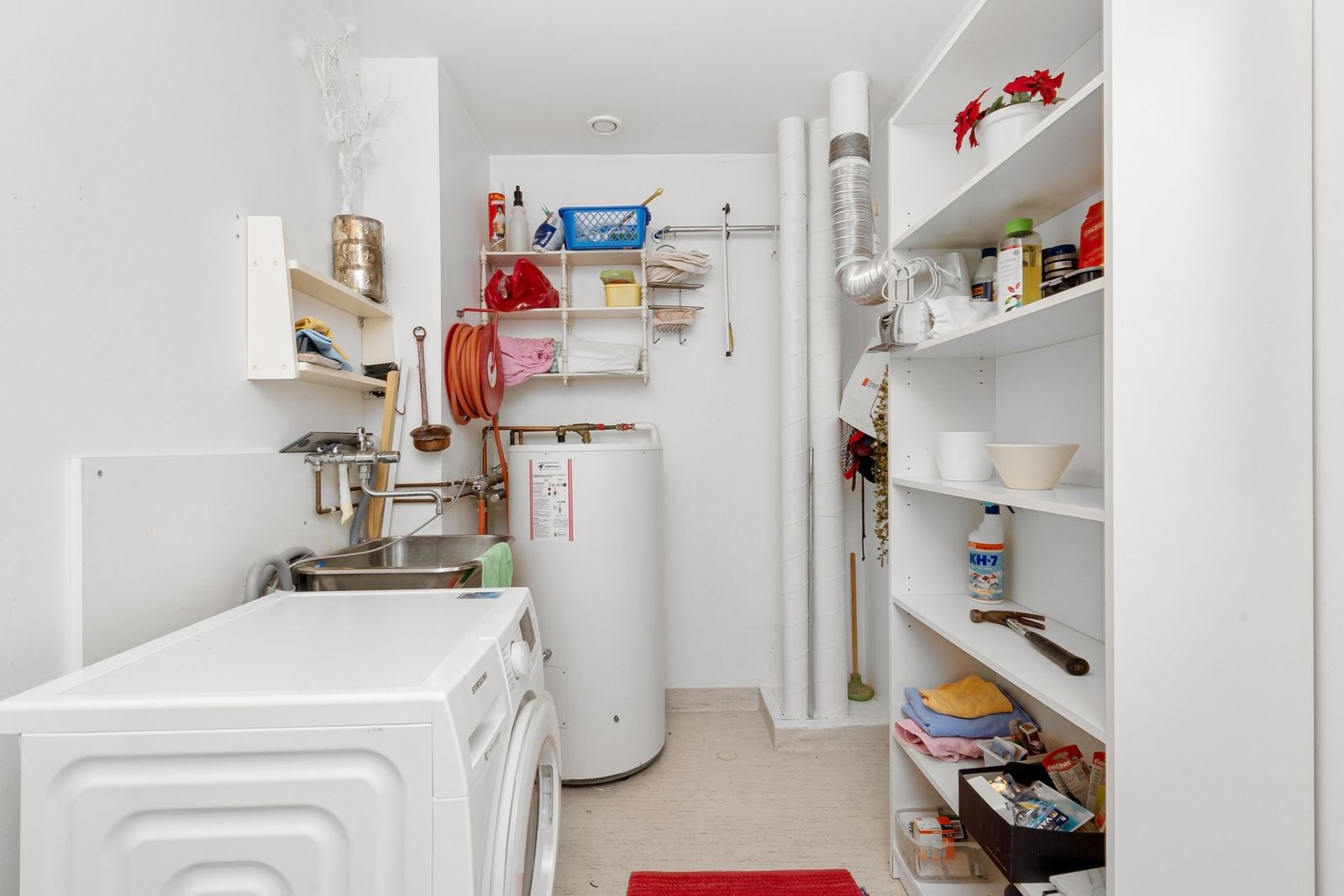
How long does a water heater last? Most tank water heaters last 8 to 12 years, and tankless units last 15 to 20. Knowing when to replace a water heater then comes down to three checks: age, warning signs, and repair cost. If yours is past 10 years, is leaking from the tank itself, or needs a repair that costs more than half of a new unit, replace it. Everything else is usually a repair. Below: how long each type lasts, the signs that matter, how to read the age off the serial number, and what a new one costs in 2026.
Key takeaways
- Tank water heaters last 8 to 12 years; tankless 15 to 20; heat pump models 10 to 15.
- Water pooling under the tank means the tank has rusted through. That is a replacement, not a repair.
- Rheem’s rule of thumb: if a repair costs more than 50% of a new unit, replace.
- Angi’s 2026 average for a replacement is $1,347, with most jobs between $881 and $1,825.
- The federal 25C tax credit for heat pump water heaters ended for installs after December 31, 2025. State HEAR rebates may still apply.
A water heater replacement means removing the old unit and installing a new one of the same or a different type. A repair swaps one part, such as a heating element, thermostat, gas valve, or anode rod, and keeps the tank.
This is general information, not professional advice. Gas, electrical, and pressurized hot water can all hurt you. When in doubt, call a licensed plumber.
Water heater lifespan by type
Age is the first thing to check, because it sets your expectations for everything else. The ranges below come from manufacturers and the Department of Energy. Hard water, high water pressure, and skipped maintenance push a unit toward the low end.
| Type | Typical lifespan | Source |
|---|---|---|
| Storage tank (gas or electric) | 8 to 12 years | Rheem, A.O. Smith |
| Storage tank (DOE estimate) | 10 to 15 years | Energy.gov |
| Tankless (gas or electric) | 15 to 20 years, sometimes more | Rheem, A.O. Smith, Energy.gov (about 20) |
| Heat pump (hybrid) | 13 to 15 years | ENERGY STAR; Energy.gov says 10 to 15 |
Gas and electric tanks share the same steel tank and the same glass lining, so their lifespans are similar. Electric models have fewer parts that can fail, but the tank itself is what ends a water heater’s life. Tankless units last longer because there is no tank to rust. Their weak point is scale in the heat exchanger, which is why both Rheem and A.O. Smith call for annual descaling in hard water areas.
How to find your water heater’s age from the serial number
Look for the rating plate, a sticker on the side of the tank near the top. It lists the model and serial number. The install date is sometimes written on the tank in marker, but the serial number is the reliable record. The three biggest US brands each use a different code.
| Brand | How to read it | Example |
|---|---|---|
| Rheem (also Ruud, Richmond) | First two digits = month, next two = year | 0720F12345 = July 2020 |
| A.O. Smith (current format, also State) | First two digits = year, next two = week of that year | 1220345678 = week 20 of 2012 |
| A.O. Smith (older units) | Second character is a letter for the month (A = January; I is skipped, so J = September and M = December), then two digits for the year | AJ89xxx = September 1989 |
| Bradford White | First letter = year, second letter = month (A = January, I skipped). Year letters repeat every 20 years | WC9876553 = March 2020 (or 2000) |
One trap: “1219” means December 2019 on a Rheem but week 19 of 2012 on an A.O. Smith. Confirm the brand first. For other brands, InterNACHI publishes a dating chart that covers dozens of manufacturers. If the plate is unreadable, the manufacturer’s customer service line can usually look it up from the model number.
Signs a water heater is going bad
Not every symptom means the unit is finished. The table sorts the common ones into repair or replace, based on guidance from Rheem, Home Depot, and home inspectors.
What each warning sign means
| Sign | What it usually means | Repair or replace? |
|---|---|---|
| Water pooling under the tank | The tank has corroded through. Rheem calls this “a serious concern” that needs replacement. | Replace |
| Rusty or brown hot water (cold water runs clear) | Corrosion inside the tank or a used-up anode rod. | Repair (new anode rod) if the tank is under 8 years old. Replace the heater if it is older or the rust persists. |
| Rumbling, popping, or knocking | Hardened sediment on the bottom of the tank. Water trapped under it boils and pops. | Repair: flush the tank. Replace if the noise continues after flushing on an old unit. |
| Leak at a fitting, valve, or the drain | Loose connection or a failed valve. | Repair |
| Hot water runs out fast or temperature swings | Sediment taking up tank space, or a failed element or thermostat. | Repair first. Angi lists heating elements at $15 to $60 and thermostats at $20 to $400. |
| Pilot keeps going out (gas) | Often a failed thermocouple, about $150 to replace per Angi. | Repair |
| T&P relief valve dripping or discharging | A worn valve, or pressure building because thermal expansion has nowhere to go. | Repair: replace the valve or add an expansion tank. Never cap the valve. |
| Energy bills climbing with no change in use | Sediment and worn parts make the unit work harder for the same hot water. | Depends on age. Past 10 years, it is a replacement signal. |
| Rust, moisture, or corrosion on the outside of the tank | The steel is failing from the inside out. | Replace |
The T&P valve is the safety device that vents the tank if temperature or pressure gets too high. Structure Tech, a Minnesota inspection firm, explains that a dripping valve is usually a simple fix: replace the valve. If a new valve still drips, the house probably has a closed plumbing system, and an expansion tank is the cure. Angi puts an expansion tank at $90 to $350 installed.
The first sign I ever got was a small pool of water under the tank. I gasped. The house is nearly 20 years old, and I assumed the tank had finally rusted through. After a careful look, it turned out to be a valve, not the tank. Check the fittings and valves before you assume the worst.
When to replace a water heater instead of repairing it
Rheem publishes the clearest rule: “if repair costs exceed 50% of the price of a new unit, replacement is almost always the better investment.” Rheem adds that repairs usually make sense on units under 6 to 8 years old, and units over 10 tend to fail again soon after one fix. Angi’s 2026 data gives you the two numbers to compare. The national average repair is $615, with most between $228 and $1,017. The average replacement is $1,347.
Work through these four questions in order. Stop at the first “yes.”
- Is the tank itself leaking? Yes: replace. No tank leak can be repaired.
- Is it past its expected lifespan? A tank over 10 years: replace. A tankless past 15 with a failing heat exchanger: replace, since the exchanger is most of the unit’s cost. Even if today’s repair is cheap, the next failure is close.
- Does the repair quote exceed 50% of a new unit? Yes: replace. A $700 gas valve and control job on a $1,300 unit is not worth it.
- Is this the second or third repair in a year? Yes: replace. Rheem lists “multiple repairs in a short timeframe” as a replacement sign on its own.
If you answered no to all four, repair it. A single failed element, thermostat, thermocouple, or T&P valve on a unit under 8 years old is a normal repair. Angi’s part prices for those start under $100, though a gas control thermostat can reach $400.
Average cost to replace a water heater in 2026
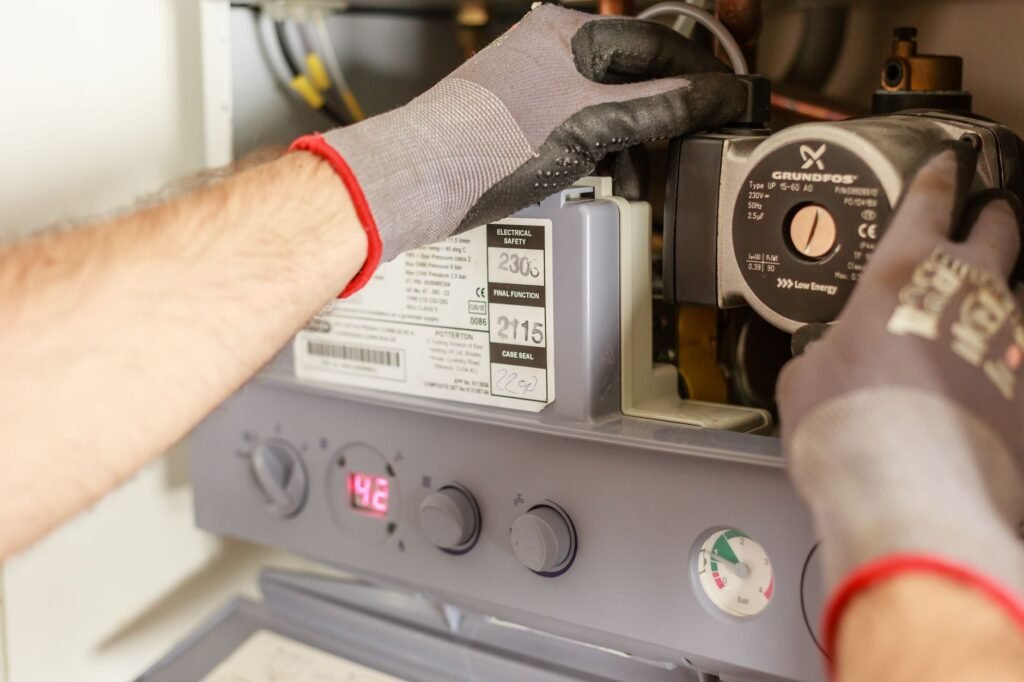
Three national cost guides updated in 2026 agree on the broad picture. A standard tank runs $600 to $3,500 installed, tankless roughly $1,000 to $5,600 depending on the guide (HomeAdvisor’s average is $2,638), and a heat pump unit $1,200 to $4,600. Labor, permits, venting, and code upgrades make up the rest.
| Item | 2026 installed cost range | Source |
|---|---|---|
| All replacements, typical range | $881 to $1,825 (average $1,347) | Angi, July 2026 |
| Tank, 40 gallon | $800 to $2,300 | Angi |
| Tank, 50 gallon | $800 to $2,500 | Angi |
| Gas tank | $700 to $2,700 | Angi, Fixr |
| Electric tank | $600 to $3,500 | Angi |
| Tankless | $1,404 to $3,901 (average $2,638) | HomeAdvisor, June 2026 |
| Heat pump (hybrid) | $1,200 to $4,600 | Fixr, January 2026 |
| Labor, tank swap | $150 to $450 | Angi |
| Labor, tankless | $600 to $1,900 | Angi |
| Permit | $25 to $300 | Angi |
| Old unit removal | $75 to $500 | Fixr, HomeGuide |
| Expansion tank | $90 to $350 | Angi |
Costs vary a lot by region and by how much your local code has changed since the old unit went in. Get two or three written quotes before you commit.
Why the heat pump option is worth pricing
Heat pump water heaters cost more up front but far less to run. ENERGY STAR estimates a family of four saves nearly $550 a year against a standard electric tank, with a payback of 3 to 6 years. HomeGuide puts annual operating cost at $160 to $190 for a heat pump unit, against $530 to $600 for a standard electric tank. They need a space with enough air around them, and they run cooler and slower than a gas tank, so ask the installer whether your utility room qualifies.
Tax credits and rebates in 2026
The federal Energy Efficient Home Improvement Credit (Section 25C) paid 30% of the cost of a heat pump water heater, up to $2,000. The One Big Beautiful Bill Act, signed July 4, 2025, ended it early. The IRS now states the credit applies only to property placed in service before December 31, 2025. A heat pump water heater installed in 2026 gets no federal 25C credit, even if you bought it in 2025.
Two things still help. First, the state-run Home Electrification and Appliance Rebates (HEAR), funded by the 2022 Inflation Reduction Act, were live in 23 states as of March 2026, per ElectrifyCalc’s state tracker. They pay up to $1,750 toward an ENERGY STAR heat pump water heater for households under 150% of area median income. Funds are limited; California’s program closed in February 2026 after less than three months. Check your state energy office. Second, ENERGY STAR notes that utility rebates of $300 to $1,000 are common. Your electric utility’s website is the place to look.
Maintenance that adds years to a water heater
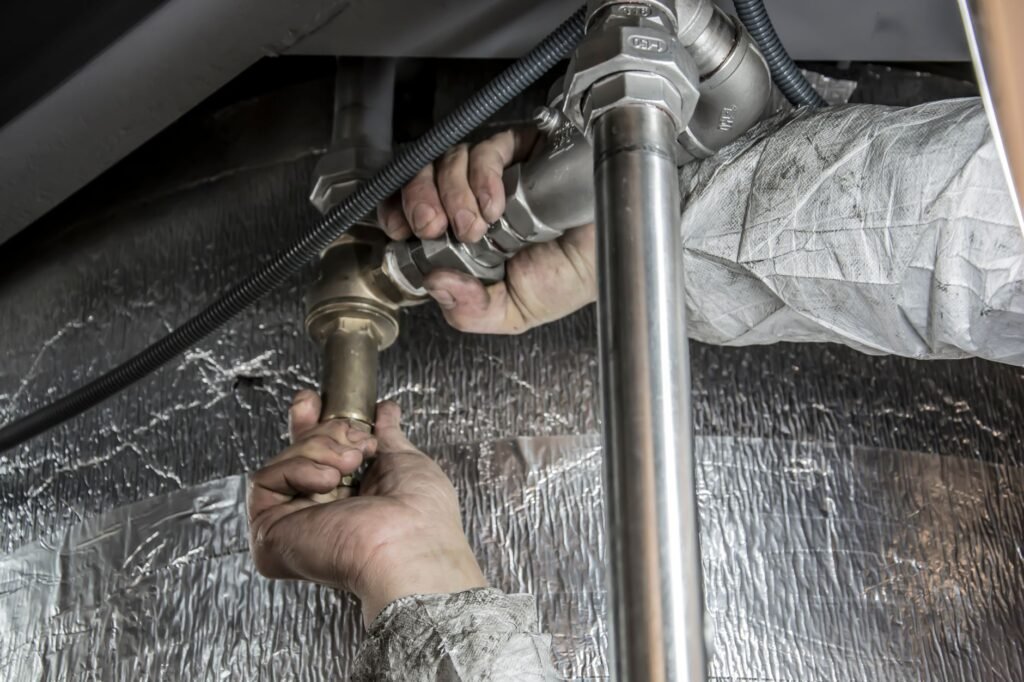
Most tanks die of rust. The anode rod is a sacrificial metal rod inside the tank that corrodes so the steel does not. Once it is used up, the tank starts to go. Angi prices a new rod at $25 to $75 for the part, which makes it the cheapest life extension you can buy. Bradford White recommends an annual service visit that inspects the rod, flushes sediment, and tests the T&P valve.
- Check the anode rod every 3 to 5 years, sooner on well or hard water. Replace it when it is mostly eaten away.
- Flush the tank once a year to remove sediment. Rheem says sediment buildup is “usually the culprit” behind rumbling and lost efficiency.
- Test the T&P valve: set a bucket under the discharge pipe, lift the lever briefly, and make sure it snaps shut and stops dripping.
- Set the thermostat to 120°F. Energy.gov says this saves $36 to $61 a year. The CPSC urges 120°F because 140°F water burns skin in six seconds, and 150°F water causes third-degree burns in two.
- Descale tankless units yearly in hard water areas. Both Rheem and A.O. Smith list this as the key tankless maintenance task.
Safety: when to shut the water heater off
If the tank is leaking, shut off the cold water supply valve on top of the tank and turn the unit off. For electric, flip its breaker. For gas, turn the gas control knob to “off” or “vacation.” Then call a plumber. If water has reached an outlet, the breaker panel, or any cord, do not step in it. Turn off power at the main panel first if you can do so from dry ground.
If you smell gas, do not troubleshoot. PG&E’s guidance is the standard one: leave the building, do not use light switches, phones, or anything that could spark until you are clear, then call 911 and your gas utility.
Frequently asked questions
How long does a water heater last?
Rheem and A.O. Smith both put tank models at 8 to 12 years and tankless at 15 to 20. ENERGY STAR cites 13 to 15 years for heat pump units. Well-maintained tanks in soft water areas often beat those numbers.
Should I replace my water heater before it fails?
If it is past 10 years and sits above finished space, a planned replacement is cheaper than an emergency one. You can compare quotes, pick the type you want, and avoid water damage. A tank in a garage with a floor drain gives you more room to wait.
Is it worth fixing a 10-year-old water heater?
Usually not. At 10 years the call comes down to the repair price and whether the tank is dry. At 10 years a tank is at the end of its expected life, and Rheem’s guidance is to replace once repairs start. Spending $600 on a unit that may leak next year is the worst outcome.
Can I replace a water heater myself?
Most areas require a permit for a water heater swap, and gas work often requires a licensed installer. Angi prices permits at $25 to $300. A DIY install that skips the permit can void the warranty and cause trouble when you sell the house. Electric tank swaps are the most DIY-friendly, but the 240-volt circuit and the T&P discharge line both have to be done right.
The bottom line
Find the age on the serial number. Under 8 years and not leaking from the tank: repair it. Over 10 years, leaking from the tank, or facing a repair over half the price of a new unit: replace it. Get three quotes, ask about a heat pump model if you have electric, and set the new one to 120°F. More home guides are in our Home section, and if the replacement bill hurts, our guide to cancelling subscriptions you forgot about can help find the money. For more household guides, see our Home section, including how to sign up for the Imagination Library.
The same repair-or-replace question comes up with plumbing you can reach yourself. If a sink or tub is draining slowly rather than leaking, start with our guide to snaking a drain yourself, which covers the one-minute test that tells you whether it is your job or a plumber’s.
Sources
- Rheem – Tank vs. tankless lifespan
- Rheem – When to repair vs. replace
- Rheem – 5 signs your water heater is going bad
- A.O. Smith – How long do water heaters last
- Energy.gov – Which water heater is right for you
- ENERGY STAR – Cost of installing a heat pump water heater
- InterNACHI – Water heater dating chart
- Fast Water Heater – Find your tank’s age by brand
- Home Depot – When to replace a water heater
- Structure Tech – Leaking relief valve
- Angi – Water heater replacement cost (July 2026)
- Angi – Water heater repair cost (August 2026)
- HomeAdvisor – Tankless water heater cost (June 2026)
- Fixr – Water heater installation cost (January 2026)
- HomeGuide – Water heater installation cost (January 2026)
- IRS – Energy Efficient Home Improvement Credit
- HVAC Base – 25C changes under the One Big Beautiful Bill Act
- ElectrifyCalc – HEAR rebates by state, 2026
- Energy.gov – Home Energy Rebates
- Bradford White – Water heater maintenance
- Corro-Protec – Anode rod inspection intervals
- HomeTips – Testing a T&P valve
- CPSC – Tap water scalds (Publication 5098)
- PG&E – Gas safety
3 thoughts on “How Long Does a Water Heater Last? Signs, Lifespan, and Cost”
Comments are closed.